How to Secure a Gazebo in Wind
Wind is the number one reason gazebos get wrecked, and here's the uncomfortable truth: it doesn't matter how strong the frame is if it isn't anchored. A gazebo is basically a sail, and once the wind gets underneath the canopy it lifts, hard. Even a commercial frame will take off if nothing's holding it down.
The good news is that anchoring one properly is straightforward once you know what goes where. This guide covers how to secure a gazebo on grass and on hard standing, how much weight you actually need, and how to use a ratchet storm kit.
Still deciding which gazebo to buy for a windy spot? Start with our best gazebo for windy conditions guide, then come back here for the how.
The Golden Rule
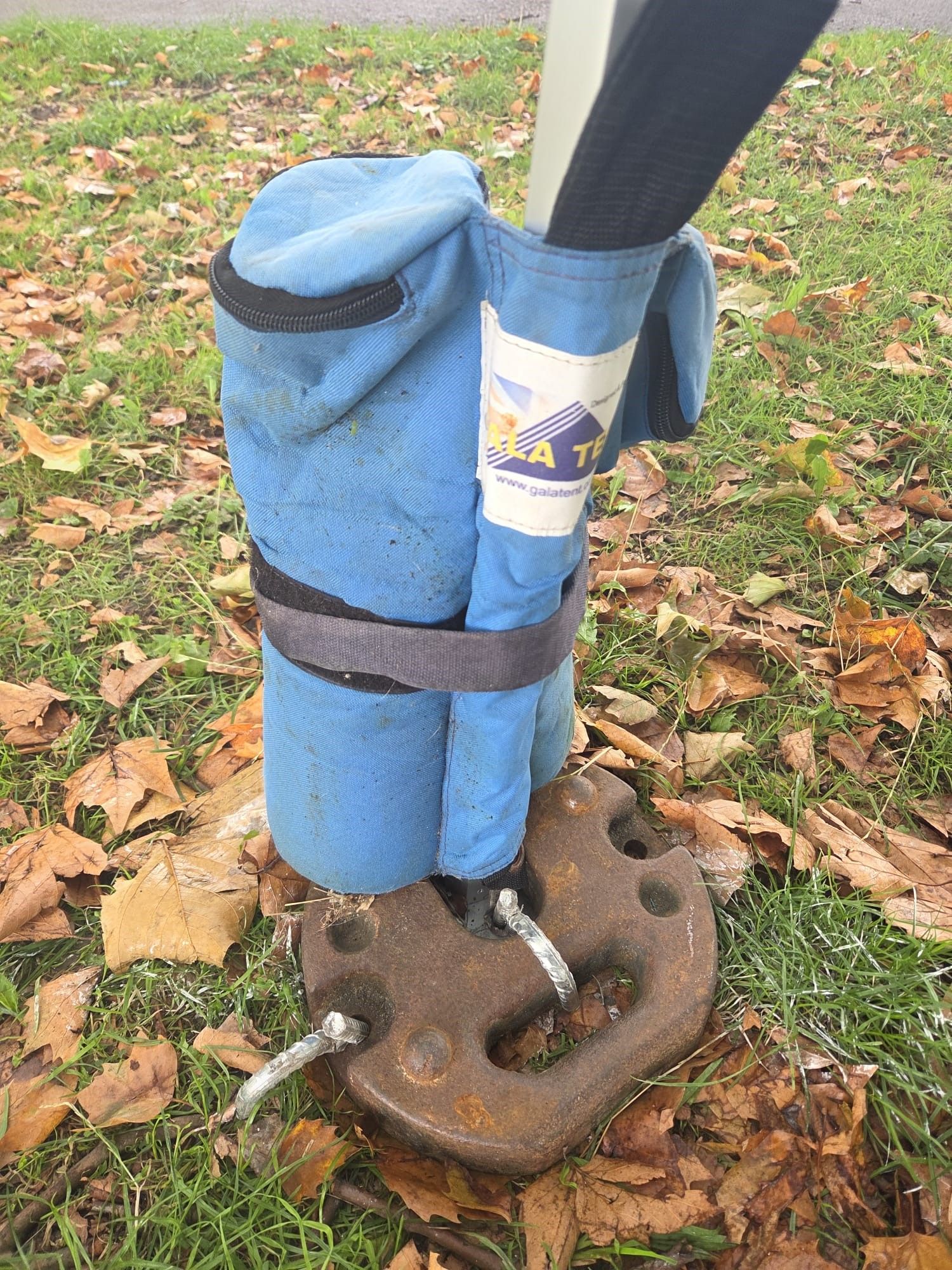
Anchor every leg, every time. Not two, not just the windward ones, all four. Match the method to the ground you're on, and when in doubt, add more, because a gazebo that shifts is a hazard to everyone around it.
And know the limit: as a rule of thumb, a gazebo shouldn't be used in winds much above 30mph, however well it's anchored. If that's forecast, the right move is to take it down. Anchoring buys you a lot, but nothing beats not having a sail up in a gale.
Securing on Grass and Soft Ground
Soft ground is the easiest to anchor into, because you can drive pegs straight down. Do it properly:
-
use thick steel ground pegs, not flimsy tent pegs, driven in at roughly 45 degrees and deep enough that they won't pull out
-
run ratchet straps or guy ropes from the top corners down to the pegs, angled outwards rather than straight down
-
add leg weights on top for extra downforce, even on grass
Keep an eye on the pegs through the day. Ground softens as it rains, and a peg that was solid at 8am can work loose by lunchtime.
Securing on Concrete, Tarmac and Patios
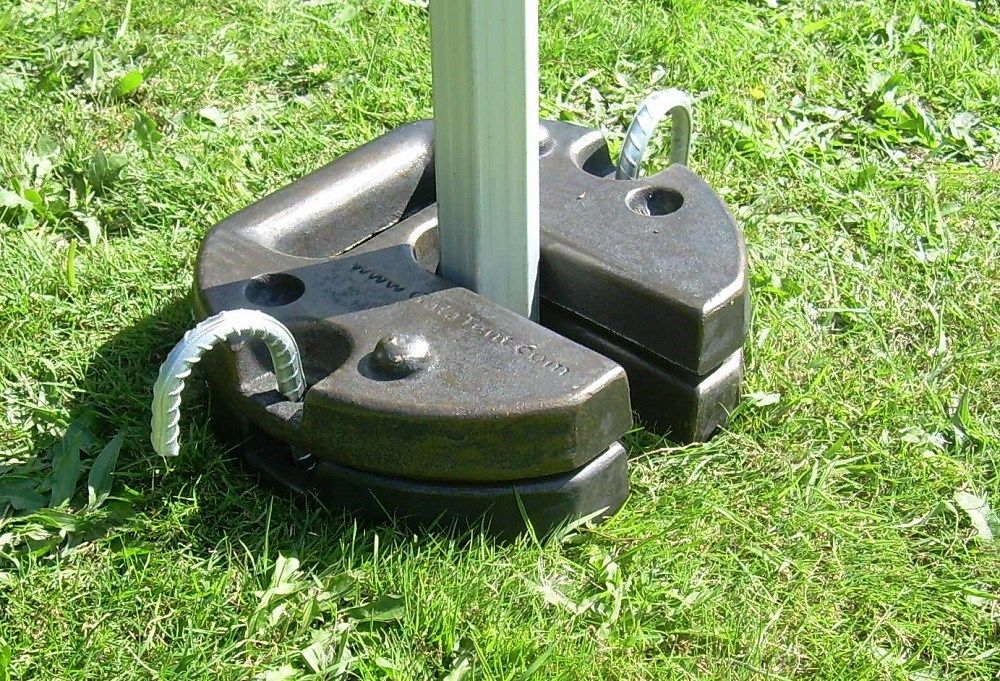
You can't peg into hard standing, so this is all about weight. Put a weight on every leg, no exceptions.
-
cast iron weights are the most reliable: compact, heavy and quick to fit. Reckon on one 13kg weight per leg as a minimum
-
water weights suit travelling traders and events, as long as they're filled right up and strapped on, not just hung over a foot
-
where there's something solid nearby, a railing, post or fence, add a ratchet strap to it too. Pad anywhere the strap rubs against metal or masonry
Go heavier for bigger canopies. A 4m x 6m, 4m x 8m or 6m x 6m has far more surface for the wind to grab, so double up. There's genuinely no such thing as too much anchorage.
How to Use a Ratchet Storm Kit
A ratchet strap kit lets you pull the frame down tight to your pegs or weights, and it holds far better than a rope tied off by hand. It's the single best upgrade to your anchoring.
-
thread the strap through the ratchet spool and pull the slack through by hand
-
tighten gradually with the handle until it's firm, without cranking so hard you distort the frame
-
lock the handle down
-
check the tension now and then, as the canopy flexing can loosen it over a long day
Keep a spare kit in the bag. They're cheap, take up no room, and can save the whole gazebo when the weather turns without warning. Here's how it's done:
Before the Wind Picks Up
A few things worth doing when a blow's coming:
-
drop the legs a setting or two. A lower gazebo has a lower centre of gravity and catches less wind
-
take the sidewalls off. They act like sails and pile on the uplift, so taking them off usually steadies the whole thing
-
if you've joined gazebos together, use proper gutter kits and clamps so there are no gaps for the wind to funnel through
-
never leave it up and unattended if the forecast's turning
And the one we'll always repeat: if it's genuinely wild out there, take it down. No gazebo is worth someone getting hurt.
Frequently Asked Questions
Can a gazebo really blow away?
How do I secure a gazebo on concrete?
How do I secure a gazebo on grass?
How much weight does a gazebo need?
How much wind can a gazebo take?
Anchor It, Then Relax
Get the anchoring right and your gazebo will shrug off the weather it's built for. Kit yourself out from the weights and anchors range. Related guides worth a look:
Choosing a gazebo for an exposed spot? See the best gazebo for windy conditions, or browse all our gazebo guides.