What Makes a Gazebo Commercial-Grade?
"Commercial" and "heavy duty" get slapped on all sorts of gazebos, including some that fold in the first stiff breeze. So it's worth knowing what those words are supposed to mean, and how to tell the real thing from a supermarket special in a fancy box.
The short version: a commercial-grade gazebo is built to go up and down hundreds of times, in all weathers, and still be standing in five years. A consumer one is built to survive a couple of sunny weekends and a birthday party. Everything below is what separates the two.
It Starts With the Frame
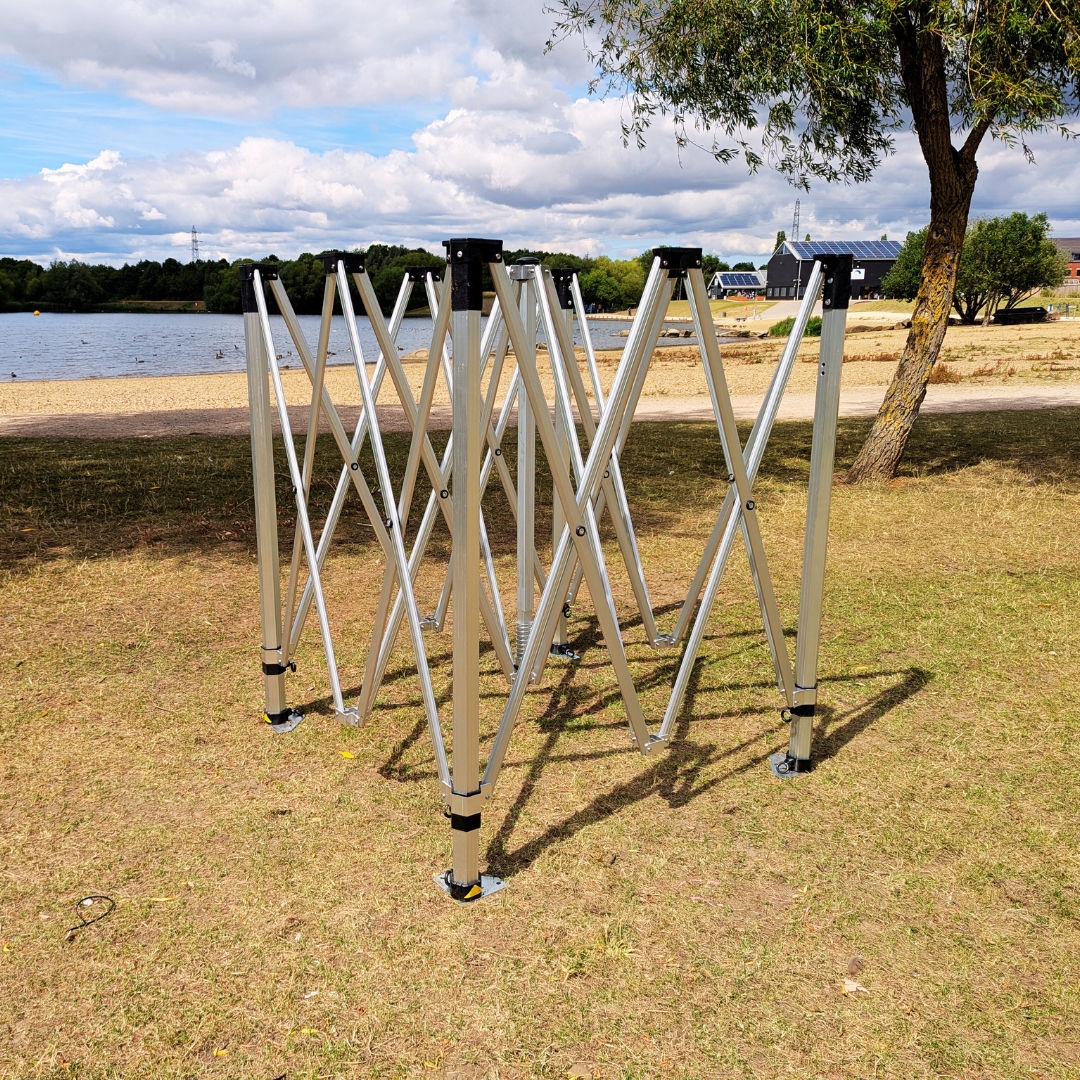
The frame is where most of the difference lives. A commercial gazebo uses aircraft-grade aluminium, hexagonal legs that resist twisting, and a proper leg thickness, 40mm, 50mm or 60mm depending on the grade. The joints and connectors are engineered to take the strain, and the leg locks are solid push-button mechanisms rather than fiddly clips.
A cheap gazebo gives itself away here: thin round tubes, brittle plastic joints, and a frame that flexes when you lean on it. Our leg thickness guide breaks down what the numbers mean and how to compare like for like.
The Canopy Does the Hard Yards
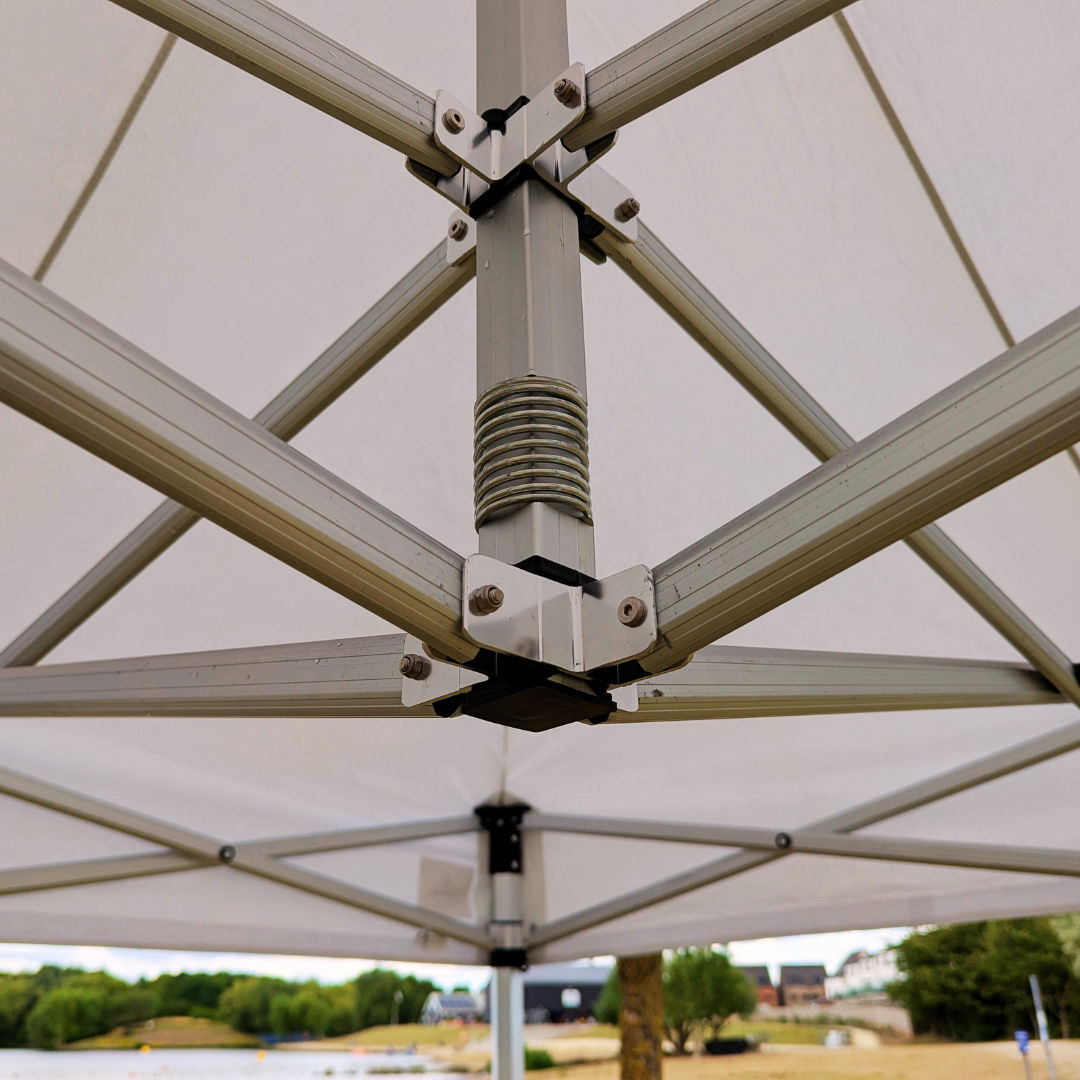
The canopy takes the weather, so it's the other half of the story. A commercial one is PVC-coated polyester: properly waterproof, not just shower-resistant, and fire-retardant as standard, which matters enormously for trading, events and anywhere a council or organiser wants to see a fire certificate.
Look for reinforced seams and stress points, UV stability so it doesn't fade and go brittle in a season, and a canopy you can actually replace rather than bin. A cheap canopy leaks at the seams, tears at the corners and fades to grey by its second summer.
Repairable by Design
Here's a test most people never think of: can you get spare parts? A commercial gazebo is designed to be repaired. Snap a leg or tear a panel and you replace that part, not the whole gazebo. Canopies, frames and fittings are all available on their own.
A consumer gazebo is effectively disposable, because when one part goes there's nothing to fix it with. That difference is the whole reason a proper gazebo works out cheaper over time.
How to Spot a Commercial-Grade Gazebo
Run down this list before you buy. A real one ticks every box:
-
a named frame material and leg size, quoted flat-to-flat, not a vague "steel" or "alloy"
-
a fire certificate they can actually send you
-
a stated waterproof rating, not just the word "waterproof"
-
spare parts and replacement canopies sold separately
-
a meaningful warranty
-
reinforced corners, seams and stress points
If a seller can't tell you the frame material, won't send a fire cert and doesn't stock spares, you're looking at a consumer gazebo in commercial clothing.
The Words That Mean Nothing on Their Own
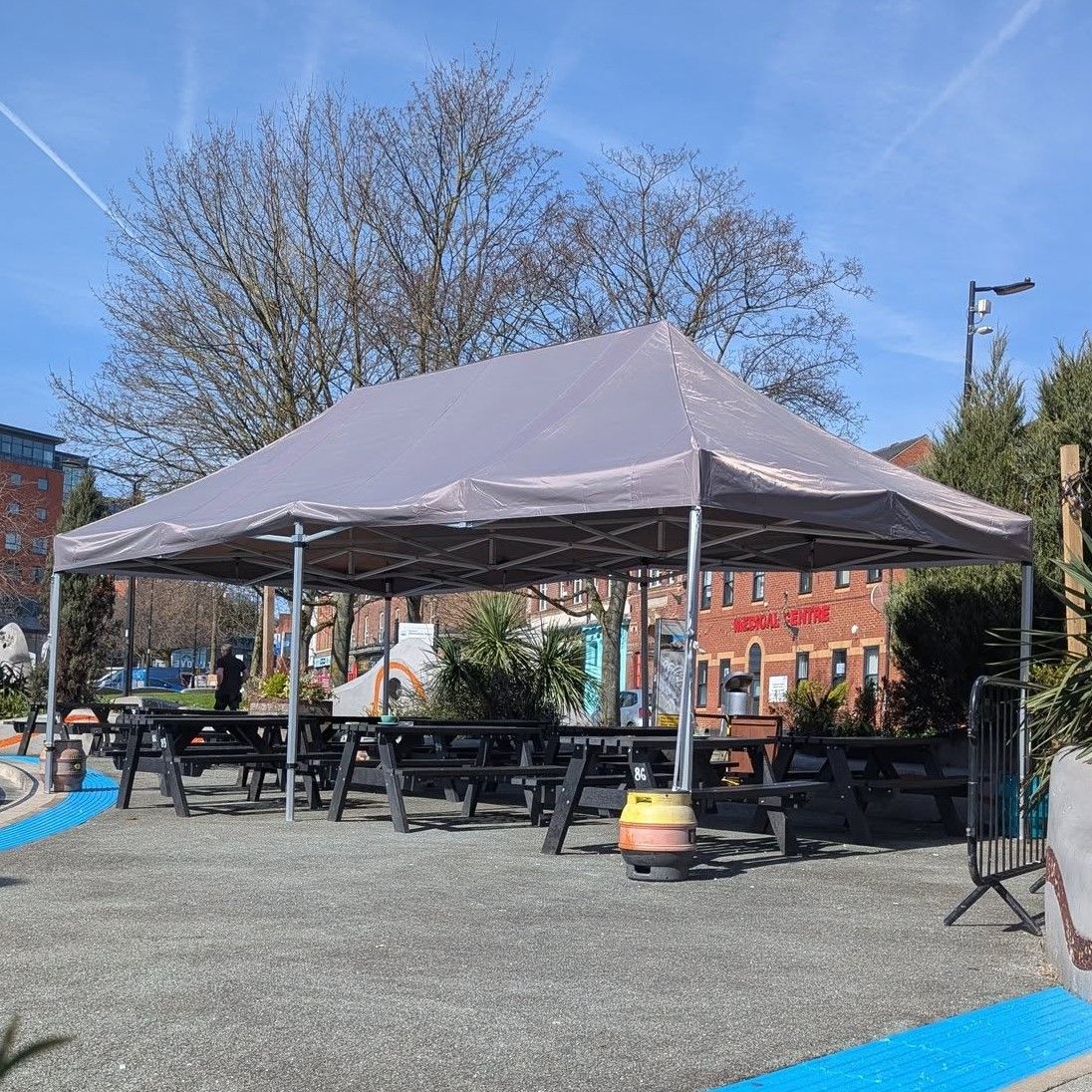
Neither "commercial" nor "heavy duty" is a regulated term. Anyone can print them on a box, and the cheap end of the market leans on them hard, precisely because they sound reassuring and cost nothing to claim.
So look past the words to the specifics. A genuine commercial gazebo is happy to tell you exactly what the frame is made of, how thick the legs are and how they're measured, what the canopy is rated to, and what happens when a part wears out. If those answers are vague, the gazebo probably is too.
Frequently Asked Questions
What does commercial-grade actually mean for a gazebo?
Is a heavy-duty gazebo the same as commercial-grade?
Do I need a fire certificate for a gazebo?
Are commercial gazebos worth the extra money?
How can I tell a cheap gazebo from a commercial one?
Buy Once, Use for Years
That's really the whole case for commercial-grade: it costs more up front and far less over time, because you buy it once instead of replacing a cheap one every season. Every gazebo we recommend is built to this standard. Related guides:
Or see the best gazebo for the job, or browse all our gazebo guides.